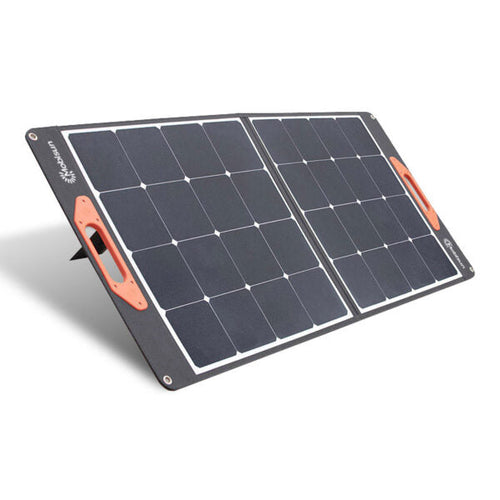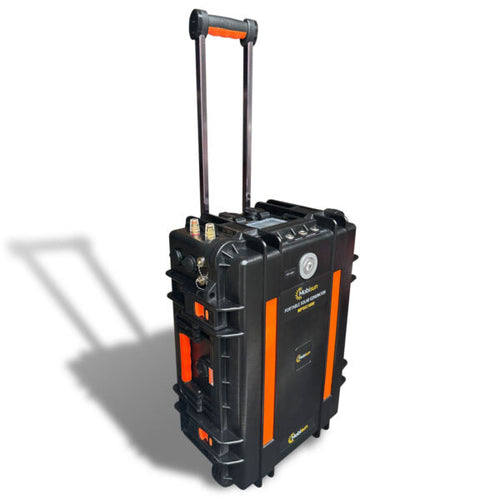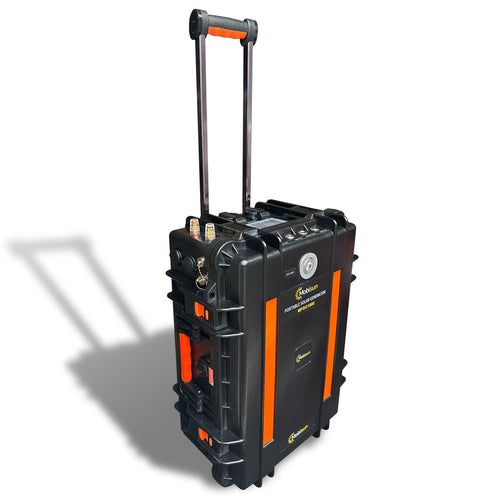

If you buy a power station, solar panel with battery, or home battery today, chances are it contains a LiFePO4 battery. But what makes this technology so special — and why do virtually all serious manufacturers choose it in droves? In this article we dive into the technology, the benefits, and why LiFePO4 (Lithium Iron Phosphate) is the only right choice for Mobisun.
What exactly is LiFePO4?
LiFePO4 stands for Lithium Iron Phosphate — a specific type of lithium-ion battery. The main differences from classic lithium-ion (NMC or NCA) chemistry lie in the cathode: instead of cobalt, nickel, or manganese, iron phosphate is used. That may sound like a minor technical detail, but it completely changes the battery's properties.
Where traditional lithium-ion batteries get hot, are flammable, and lose significant capacity after 500-1,000 charge cycles, LiFePO4 excels in three things: safety, lifespan, and stability.
Key difference
LiFePO4 has a much more stable crystal structure. Even under overheating, short-circuiting, or physical damage, no "thermal runaway" occurs — the chain reaction that causes classic lithium-ion batteries to catch fire.
1. Safer than any other lithium battery
Safety is the reason LiFePO4 was originally developed for medical equipment, electric buses, and industrial backup systems. In a Mobisun power station, the battery sometimes sits in full sun for hours, gets charged with high current from solar panels, and is used by you to run refrigerators or power tools. In all of these scenarios, there must be no fire hazard.
LiFePO4 cells withstand:
- Nail penetration tests — no fire, no explosion
- Overcharging — the battery degrades but does not ignite
- Short-circuiting — internal BMS shuts off instantly
- Extreme temperatures — stable from -20°C to +60°C
2. 4-8x longer lifespan
This is perhaps the most underrated benefit. A classic lithium-ion battery loses significant capacity after 500-1,000 charge cycles. LiFePO4 delivers 3,000 to 6,000 cycles before capacity drops below 80%.
What does that mean in practice? Suppose you do one full charge every day — then a LiFePO4 battery lasts 8 to 16 years. With classic lithium-ion, that's 1.5 to 3 years.
| Property | Lithium-ion (NMC) | LiFePO4 |
|---|---|---|
| Charge cycles (to 80%) | 500 – 1,000 | 3,000 – 6,000 |
| Fire hazard | High when damaged | Virtually zero |
| Energy density | 150-200 Wh/kg | 120-160 Wh/kg |
| Temperature range | -10°C to +45°C | -20°C to +60°C |
| Cobalt required | Yes (unethical) | No |
3. No cobalt — ethical and sustainable
Classic lithium-ion batteries often contain cobalt, whose mining in Congo is associated with child labor and environmental pollution. LiFePO4 contains no cobalt, nickel, or manganese — only iron and phosphate, two of the most abundant elements on Earth.
As a conscious consumer choosing sustainable energy, you don't want your battery to undermine that sustainability through unethical mining. LiFePO4 closes that loop.
4. Better withstands deep discharge
A Pb (lead-acid) battery is permanently damaged if discharged below 50%. Classic lithium-ion deteriorates over time if you regularly drop below 20%. LiFePO4 can be discharged to 10-20% without issue, time and again, without significant losses.
For off-grid use, this means you can actually use much more of your battery capacity. A 100Wh LiFePO4 battery delivers 80-90 Wh of usable energy in practice. An old lead-acid battery of the same size only delivers 40-50 Wh.
Did you know?
A 1,000Wh LiFePO4 battery weighs on average 8 kg. A lead-acid battery with the same usable capacity would weigh 30-40 kg. Do the math on what that means for camping, caravanning, or boating.
5. Constant output voltage
LiFePO4 keeps the output voltage relatively constant until it is nearly empty. This means your devices consistently receive the same 230V/12V voltage — even when the battery is only 20% full. With lead-acid, the voltage gradually drops, causing devices to sometimes stop working properly.
For devices with a motor (refrigerator compressor, power tools), this is essential — they run more efficiently and last longer.
How do you recognize LiFePO4 in a product?
More and more manufacturers communicate this clearly, but look for these signs:
- 3,000+ charge cycles in the specs → almost certainly LiFePO4
- "LFP" or "LiFePO4" in the product description
- IP54 or higher → usually indicates a modern battery management system
- 2-5 year warranty → manufacturers only offer this with confidence in the lifespan
At Mobisun, we use LiFePO4 in all power stations from 500Wh and up, including the popular Portable Solar Generator 3000Wh and the PSG1800 Bundle.
Conclusion
LiFePO4 is not just a hype — it is a fundamental improvement in battery technology that simultaneously advances safety, lifespan, ethics, and performance. Yes, the battery is slightly larger and heavier per Wh than classic lithium-ion, but that's a small price for a product that lasts 8-16 years and poses no fire hazard.
If you buy a power station or home battery today and don't see LiFePO4 in the specs — ask yourself why the manufacturer chose an inferior technology. We already know the answer.